
SOUND DESIGN / FIELD NOTE
Sound Design Is What Makes an AI Film Feel Finished
A practical guide to using sound, silence and rhythm to give generated images a convincing world.
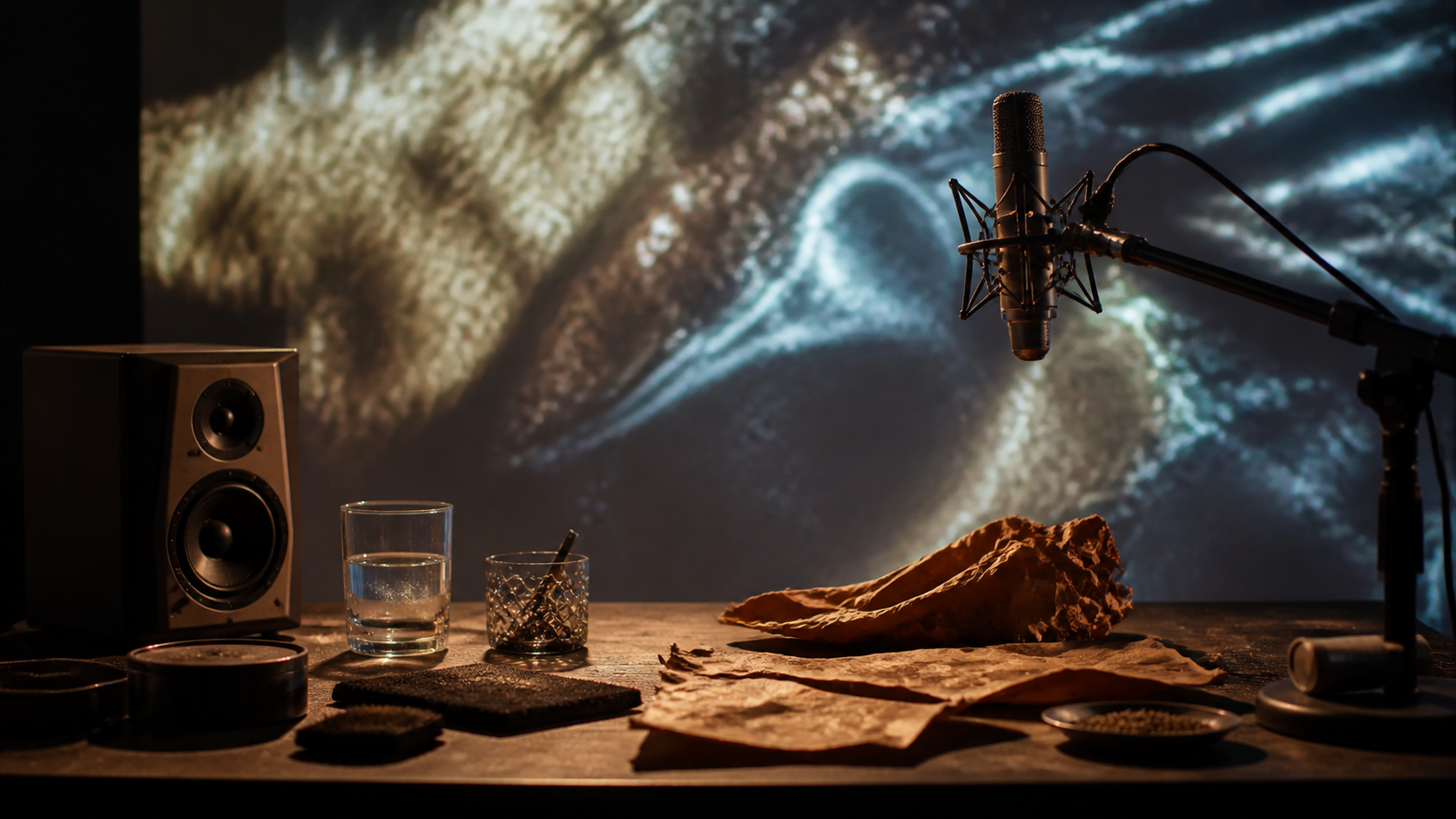
Generated images can feel finished before they are emotionally convincing. Sound is what gives a visual world weight, distance, texture and time. The strongest AI film sequences are usually designed for the ear as carefully as they are designed for the frame.
What this workflow changes
Start with a world, not a music track. List the sounds the space would naturally contain: air, fabric, room tone, traffic, machines, footsteps or small object details. Build these quiet layers first. They give the audience a place to stand before the score begins to shape emotion.
How to build the process
Use sound to create the cuts that images cannot. A door close can pull us to a new location; a rising tone can create anticipation before the visual change; a sudden removal of ambience can make a detail feel important. Let the audio enter early or leave late to make transitions feel authored.
Keep the mix selective. One clear foreground sound and a restrained bed will often carry more impact than a full stack of effects. The aim is specificity, not volume. When every moment is loud, no moment has scale; when the soundscape has breathing room, small details become memorable.
Make the final pass count
Test the final sequence without looking at the screen, then without sound. Each version should carry part of the story on its own. When they are combined, the image and sound should provide different information rather than repeating the same feeling.
Frequently asked question
Should sound be added only after the visuals are locked?
No. Introduce a simple sound sketch during the rough cut so rhythm and transitions can influence the visual decisions.
This is an original field note. Use it as a working reference, then adapt the process to the story in front of you.