
CREATIVE DIRECTION / FIELD NOTE
Build an AI Reference Board That Keeps Your Work Coherent
How to turn references, texture and composition into a useful visual system before you generate.
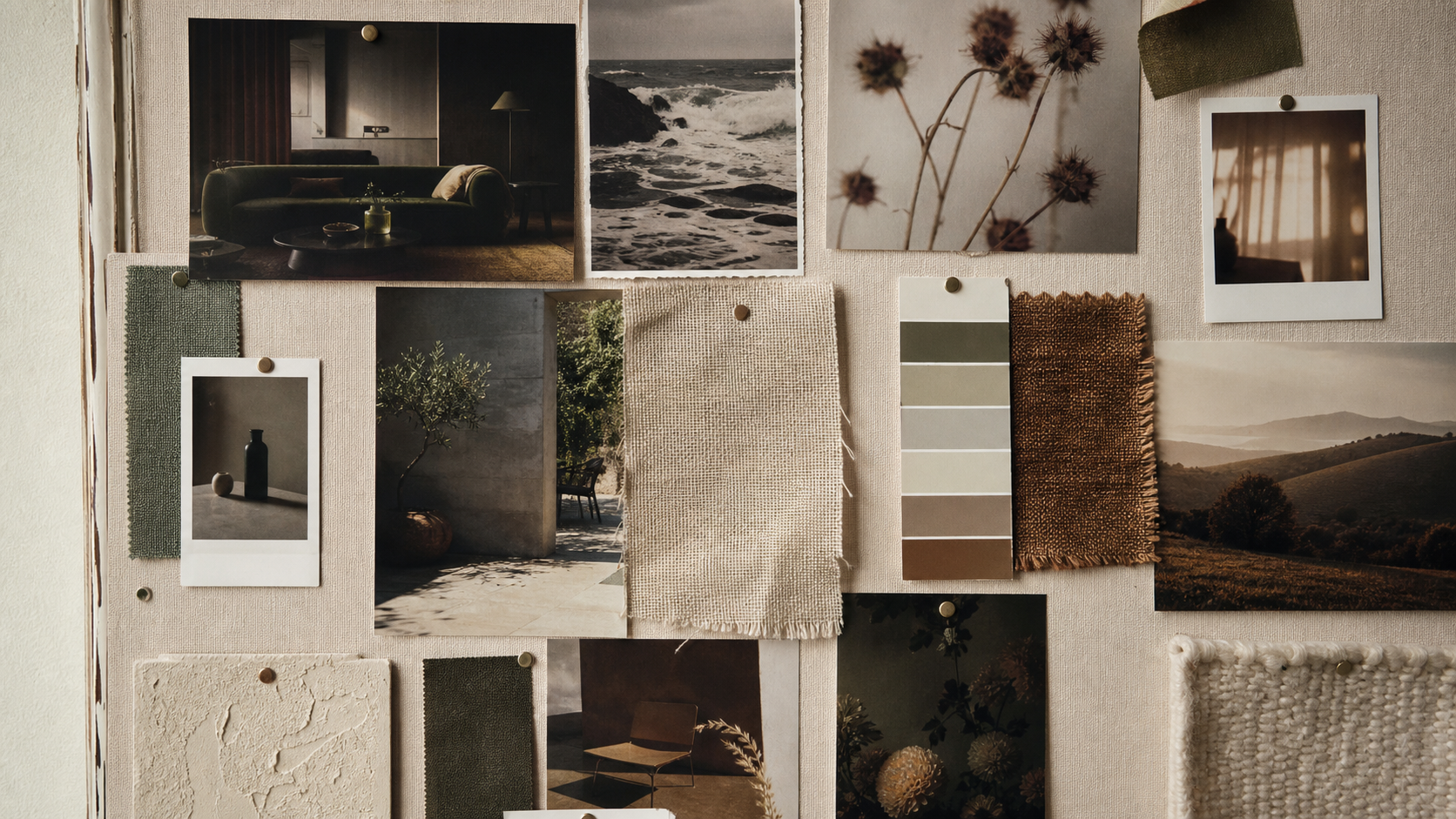
A reference board is not a moodboard of things you like. It is a decision tool that makes the visual language of a project visible before generation begins. A strong board lets you compare every new output against an authored direction rather than an endlessly shifting idea.
What this workflow changes
Collect references by job, not by platform. Find images for camera distance, light, material, colour, performance, geography and pace. A frame can be beautiful and still be wrong for the story, so note what each reference contributes. Keep the board limited enough that patterns are visible.
How to build the process
Turn taste into rules. Choose a few repeatable signals such as hard side-light, a muted palette, a handheld camera relationship or one accent colour. These rules do more work than a long prompt full of adjectives because they can be recognised in every frame and carried into edit and grade.
Build contrast into the board. Include an example of what you do not want: overly glossy skin, generic neon cityscapes, excessive shallow focus or distracting movement. Negative reference is a useful creative boundary when the generation process wants to pull toward familiar, high-impact imagery.
Make the final pass count
Review the board after the first generation pass. Keep references that still serve the material and remove the ones that only sounded good in theory. The board is a living production document, not decoration; it should become more precise as the project develops.
Frequently asked question
How many images belong on a reference board?
Start with twelve to twenty. More than that often makes the direction feel broad instead of intentional.
This is an original field note. Use it as a working reference, then adapt the process to the story in front of you.