AI CONTENT VERIFICATION / ANALYSIS
SynthID Detector is open to everyone: use the result as one asset check
Google has widened its watermark checker globally. A detected mark is useful provenance evidence; an empty result cannot clear a campaign image or video on its own.
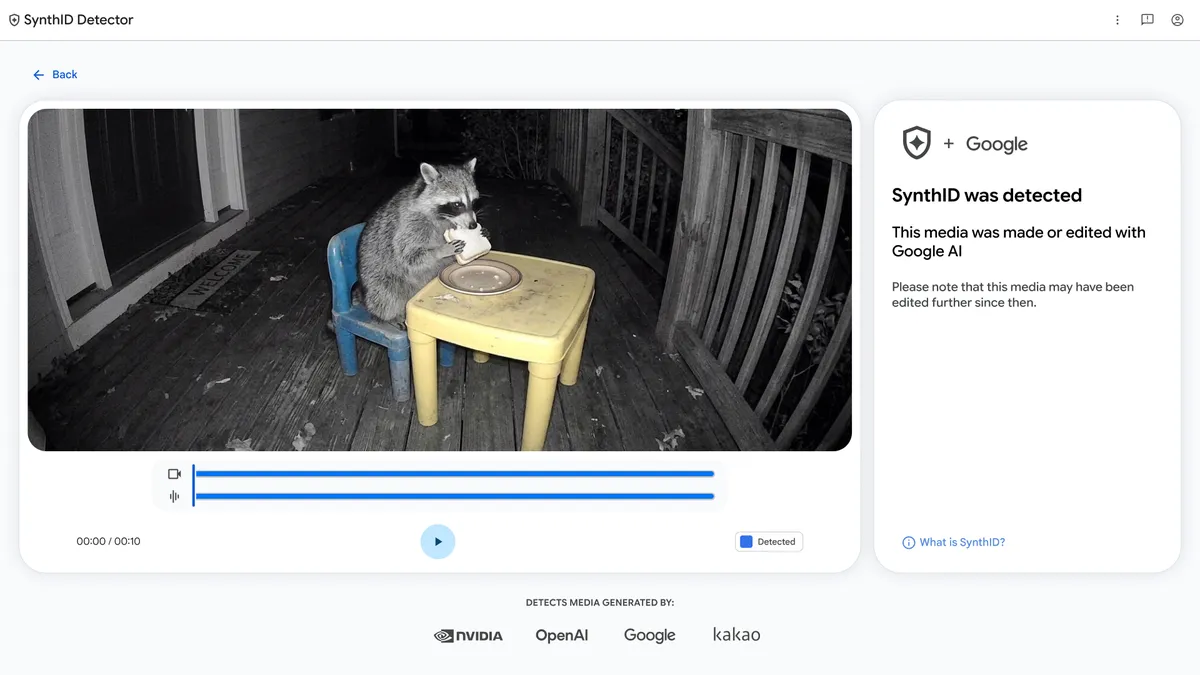
Google expanded SynthID Detector to everyone on 7 October 2026, making it available globally in English. The tool checks images, video and audio for its imperceptible watermark; Google says it covers eligible AI media from its tools and partners including OpenAI, NVIDIA and Kakao, with Apple planned. For a creator approving a campaign asset, this adds a useful check. It does not turn a single scan into proof that a file is authentic, licensed or accurate. [1]
Run the check on the actual file
Keep the version that will be published, along with the original source file if available. Upload the image, video or audio to SynthID Detector and save the result with the asset record. Google says the portal can highlight likely watermarked areas in images and segments in audio or video. If only part of an asset is flagged, note the location rather than describing the entire work as generated. Record the file name, date, tool result and who supplied the asset. [1] [2]
For an ad, check the final cropped image or exported video as well as any supplied original. A screenshot in a deck may be resized, recompressed or placed inside a larger layout. Keep both results, because the difference can help a producer trace which step changed the file. This is a practical review method, not a claim that SynthID detects every transformation reliably.
Read a negative result narrowly
SynthID detects its own watermark, not every possible kind of AI generation. That follows from Google’s description of the tool and its supported ecosystem. If no mark is found, the defensible statement is that the scan did not detect SynthID in that file. It does not establish that a photograph is camera-original, that another model was not used, or that a product claim is true. An uncertain or partial result needs the same restraint. [1] [2]
Ask the supplier for the capture or generation history, original file, edit chain and permission to use the subject, product and music. Compare visible packaging, prices, claims and faces with approved references. For a high-stakes campaign, have a person responsible for the brand review the asset alongside the detector result. A watermark says something about a creation path; it cannot approve rights, likeness consent or advertising copy.
Make provenance part of the handoff
Google first introduced SynthID Detector to early testers in 2025 and has now widened access. That makes it easier for smaller teams to add a consistent check before publication. Add a short provenance field to every asset handoff: source, edits, permissions, scan result and remaining questions. If the result is positive, disclose the AI contribution accurately. If it is negative, keep investigating where the source is uncertain. The value of the detector is context for a decision, not a substitute for that decision. [1] [2]
Sources
- Google: We’re making it easier to identify AI-generated content globally · Published 2026-10-07; checked 13 October 2026.
- Google: SynthID Detector portal announcement · Published 2025-05-20; checked 13 October 2026.