AI WORKFLOWS / ANALYSIS
Gemini Decisions API: test a brief checker before trusting its score
Google's new multimodal API can score fixed questions about a creative asset. A small labelled trial can show whether it helps a human reviewer catch mistakes.
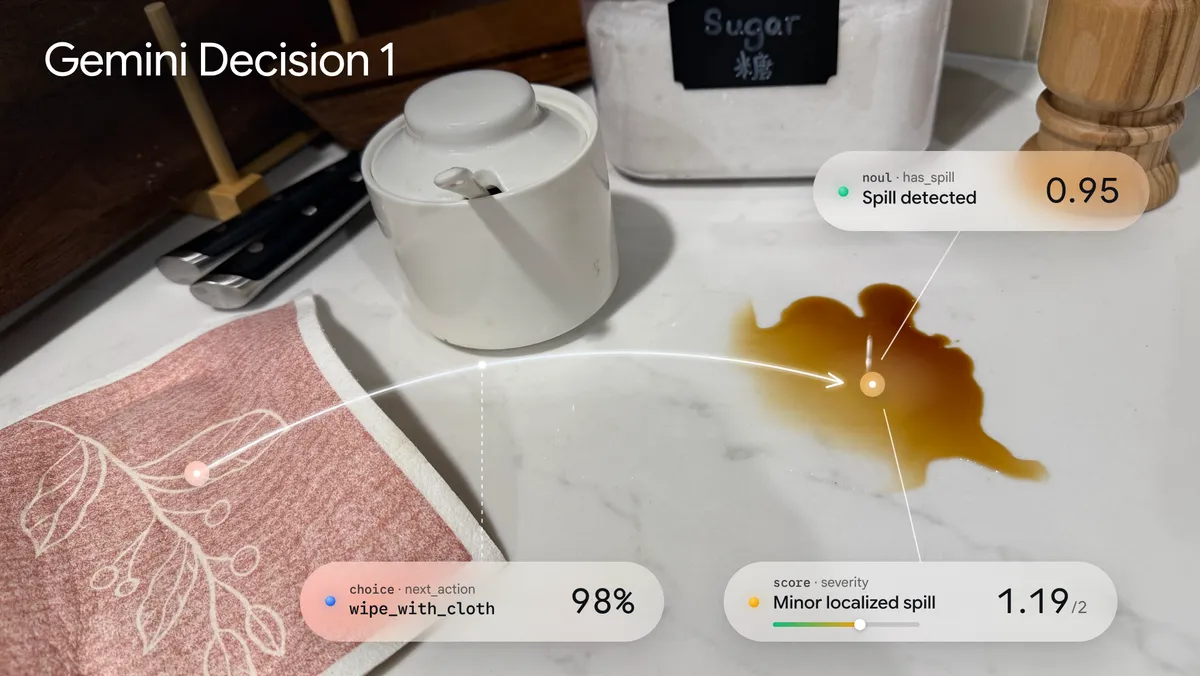
Google introduced the Gemini Decisions API on 11 November 2026 for bounded questions about text, images, audio, video and PDFs. Instead of drafting an explanation, its Gemini Decision 1 model can return a choice or rubric score with confidence. Google says one request can contain up to 1,000 questions, and the API is available through Google AI Studio. For a creator team, the interesting possibility is a first-pass check against a production brief. That is a use case to test, not a verified quality-control result; WASSAI has not benchmarked the service. [1]
Start with a narrow checklist
Pick one repeatable deliverable, such as square product ads or subtitled 15-second videos. Write five questions that a reviewer can answer from the actual asset: Is the approved product visible? Is the offer shown exactly as supplied? Are captions present when speech appears? Is the final call to action legible? Does the frame show an unintended product variation? Attach the approved brief as context and keep each answer format limited to yes/no, a few named choices or an ordered rubric. [1]
Google describes these three decision types and says the model returns probabilities or confidence scores. Those numbers express the model's estimate, not a guarantee that the asset is correct. A high-confidence mistake about a price, legal line or visual claim could still be costly. Exact text and numerals deserve a separate direct comparison with the approved source, followed by a person checking the final export. [1]
Measure misses before automating
Build a small labelled set of past assets: some correct, some with known issues such as clipped captions, incorrect packaging or a missing disclaimer. Have a human reviewer mark the right answer first. Run the same checklist through the API and record false alarms, missed errors and time spent resolving disagreements. Keep examples from different lighting, layouts and languages. A single clean demo cannot tell you how a Hindi-English caption or a dense retail banner will behave.
Set a human-review path for uncertain scores, but also sample high-confidence passes. Decide in advance which errors can never be auto-approved. If the tool flags many harmless variations, narrow the question or improve the reference material; if it misses critical defects, do not put it in the release gate. Use the trial to learn the boundary of the checker, not to replace the final editor.
Keep the launch claim in proportion
Google reports strong speed, price and benchmark results for its new model, including its own comparisons with other APIs. These are company-reported figures and may not describe a particular creative workflow. The practical question is simpler: does a fixed, auditable checklist catch enough real mistakes to help your team publish more reliably? Only a labelled test on your own assets can answer that. [1]
Sources
- Google: Gemini Decisions API: Fast, calibrated multimodal decisions · Published 2026-11-11; checked 12 November 2026.